Introduction
The recent collision of two Delta Air Lines planes at LaGuardia Airport in New York has highlighted urgent concerns regarding aviation safety and airport operational procedures. The incident occurred on the afternoon of October 23, 2023, drawing attention not just for the emotional impact but also for the possible implications on air travel efficiency and safety regulations.
Details of the Incident
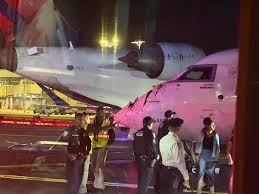
According to eyewitness reports and preliminary investigations by the Federal Aviation Administration (FAA), a Delta Boeing 737, which was preparing for takeoff, collided on the taxiway with another Delta aircraft that was taxiing to the terminal after landing. Fortunately, no serious injuries were reported among the 150 passengers on board either plane, and both aircraft sustained only minor damages.
Emergency response teams quickly arrived at the scene to ensure the safety of all passengers and crew members. Passengers were transferred to another terminal and were provided accommodations as necessary. The FAA is conducting a thorough investigation to understand the events leading up to the collision, focusing on communication protocols between the pilots and air traffic control.
Reactions and Implications
The incident has raised alarms among airline industry experts and safety advocates. Many are questioning the robustness of existing safety measures at busy airports like LaGuardia, which is known for its challenging approach and taxiway configurations. Aviation safety expert Dr. Laura Jennings stated, “Such incidents, no matter how minor they may seem, should compel airport authorities to reevaluate traffic management and safety protocols to prevent similar occurrences in the future.”
Additionally, Delta Air Lines has expressed its commitment to cooperating fully with regulators during the investigation, emphasizing their priority of passenger safety. In a public statement, the airline reaffirmed, “The safety and well-being of our customers and crew members are our top priority, and we will do everything possible to support our internal investigation and the FAA’s assessment.”
Conclusion
As the investigation proceeds, it is crucial for regulators to reassess procedures that govern plane movements on the ground at major airports to ensure safety remains paramount. While no injuries occurred in this incident, it serves as a stark reminder of the importance of vigilance in aviation operations. The FAA’s findings may lead to updated guidelines and training protocols for airline personnel, which could ultimately improve safety not only at LaGuardia but across the aviation industry as a whole.