“Security in the Persian Gulf and the Sea of Oman is either for everyone or for NO ONE,”
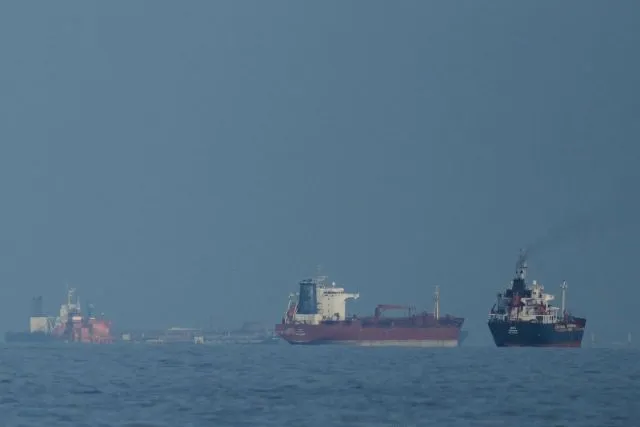
The blockade, which will target vessels of all nations entering or departing Iranian ports, follows failed U.S.-Iran ceasefire talks in Pakistan. This aggressive move has prompted Iran to warn that no port in the region will be safe.
In retaliation, Iran’s Revolutionary Guard has stated that military vessels approaching the blockade will receive a “forceful response.” Iranian parliament speaker Mohammad Bagher Qalibaf added, “If you fight, we will fight.”
The implications of the blockade are already being felt in global markets. Following the announcement, the price of U.S. crude surged 8% to $104.24 a barrel, while Brent crude rose 7% to $102.29. This spike in oil prices comes as the average price of petrol in the U.S. exceeds $4.12, a significant increase from less than $3 before the war began.
In a stark warning, Qalibaf noted, “Enjoy the current pump figures. With the so-called ‘blockade’, soon you’ll be nostalgic for $4-$5 gas.” Meanwhile, the UK has stated it will not participate in the U.S. blockade, further complicating the geopolitical landscape.
Iran has been exporting millions of barrels of oil since the conflict began, often through clandestine routes. The U.S. blockade aims to cut off this vital supply, which previously accounted for 20% of global oil transited through the Strait of Hormuz.
Former President Donald Trump claimed, “Iran’s Navy is laying at the bottom of the sea, completely obliterated – 158 ships.” This statement underscores the ongoing military tensions in the region.
As the situation develops, the exact impact of the blockade on global oil prices remains unclear. Details remain unconfirmed.