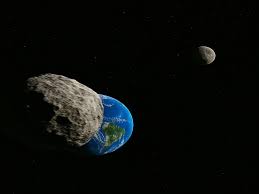
The Significance of Two Moons
In an exciting discovery that has captured the attention of the scientific community, NASA has confirmed the existence of a two moons asteroid system orbiting Earth. This finding not only enhances our understanding of celestial bodies in our vicinity but also underscores the importance of continued exploration and monitoring of near-Earth objects.
Details of the Discovery
The announcement was made during a recent press conference held at NASA’s Jet Propulsion Laboratory, where scientists revealed that the asteroid, designated as 2023 QH1, is approximately 300 feet wide. What sets it apart, however, is its unique two-moon system, which was detected using advanced imaging techniques.
The two moons, each around 50 to 70 feet in diameter, were observed to be in stable orbits around the larger asteroid. This rare configuration provides researchers with a new perspective on how such systems form and evolve, offering insights into the history of our solar system.
Implications for Future Research
As highlighted by Dr. Rachael Williams, a lead researcher on the project, “Understanding such asteroid systems could offer valuable information about the materials and conditions present in the early solar system, potentially revealing clues about the origins of life on Earth.” The findings also raise the possibility of utilizing these asteroids as resources for future space missions, as the metal and minerals found within them could be critical for sustainable space exploration.
Conclusion and Future Outlook
The discovery of the two moons orbiting Earth’s asteroid comes as a reminder of the vast possibilities within our solar system and the potential for similar discoveries in the future. NASA plans to continue monitoring 2023 QH1 as well as other near-Earth asteroids, leveraging upcoming missions to further enhance our understanding of these remarkable celestial objects. As technology advances, so too will our capacity to explore and understand the complexities of space, with potential implications for science, industry, and even the future of human life off our planet.