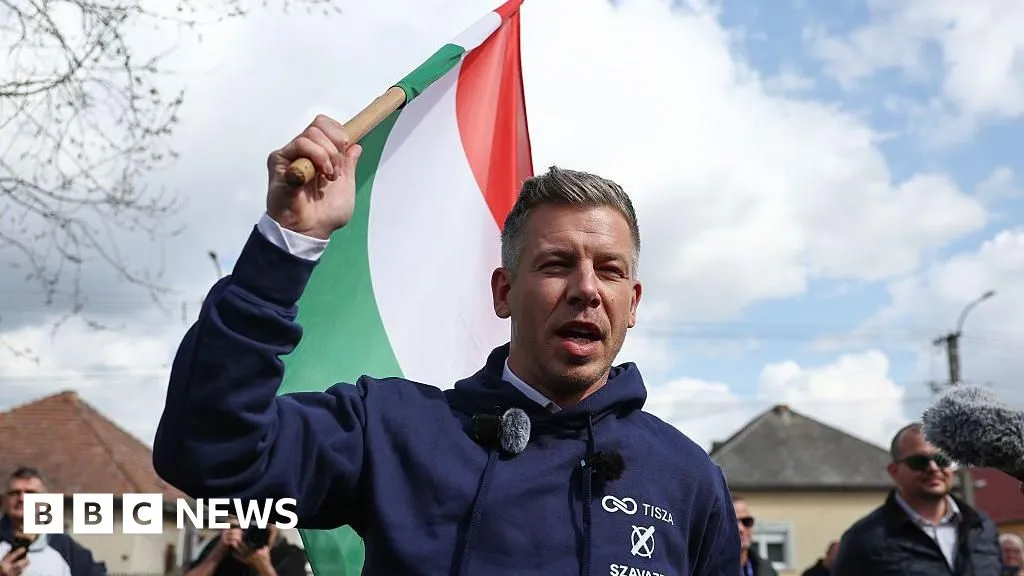
Péter Magyar has made headlines by establishing Hungary’s largest opposition party, Tisza, after 16 years of dominance by Viktor Orbán’s Fidesz. This development marks a significant shift in the Hungarian political landscape, as Magyar’s party garnered 29.6 percent of the vote in the recent European Parliament elections, attracting approximately 1.3 million voters. The stakes are high, as Magyar’s rise poses a direct challenge to Orbán’s long-standing rule.
Magyar’s political journey is deeply intertwined with Fidesz, where he was once a member and maintained close ties with key figures, including his ex-wife, Judit Varga, who has served as Hungary’s minister of justice since 2019. However, their marriage ended in March 2023, reportedly due to political disagreements. This personal split reflects the broader tensions within Hungary’s political arena, as Magyar has increasingly distanced himself from Fidesz.
In a dramatic turn, Magyar secretly recorded a conversation with Varga that highlighted government interference in a corruption case, further escalating his criticism of the current administration. Following a pardon scandal involving Varga, he took to social media to voice his concerns, marking a clear departure from his previous affiliations. His commitment to anti-corruption measures has resonated with many voters, promising a return to a democratic rule-of-law state if elected.
At a rally on March 15, 2024, over 50,000 supporters gathered to hear Magyar’s vision for Hungary, culminating in a National March on April 6, where 100,000 people showed up in solidarity. These events underscore the growing momentum behind the Tisza party, which was officially registered in 2020 and is also known as the Party of Respect and Freedom.
Magyar’s platform includes ambitious proposals to limit the prime minister’s term to eight years, a move that would retroactively impact Orbán. He has also pledged to join the European Public Prosecutor’s Office, signaling a commitment to European standards of governance and accountability. As he walks 250 kilometers from Budapest to Oradea, visiting 500 locations during his campaign, he emphasizes his dedication to connecting with the electorate.
Despite these developments, Magyar faces accusations of attempting to extinguish all opposition parties except his own, raising questions about the future of Hungary’s political diversity. As he navigates this complex landscape, his actions will be closely scrutinized by both supporters and critics alike.
Looking ahead, the political climate in Hungary remains uncertain. With the next elections on the horizon, the question of whether Magyar can sustain his momentum and effectively challenge Orbán’s regime looms large. As tensions rise and public sentiment shifts, the outcome of this political battle could redefine Hungary’s future.