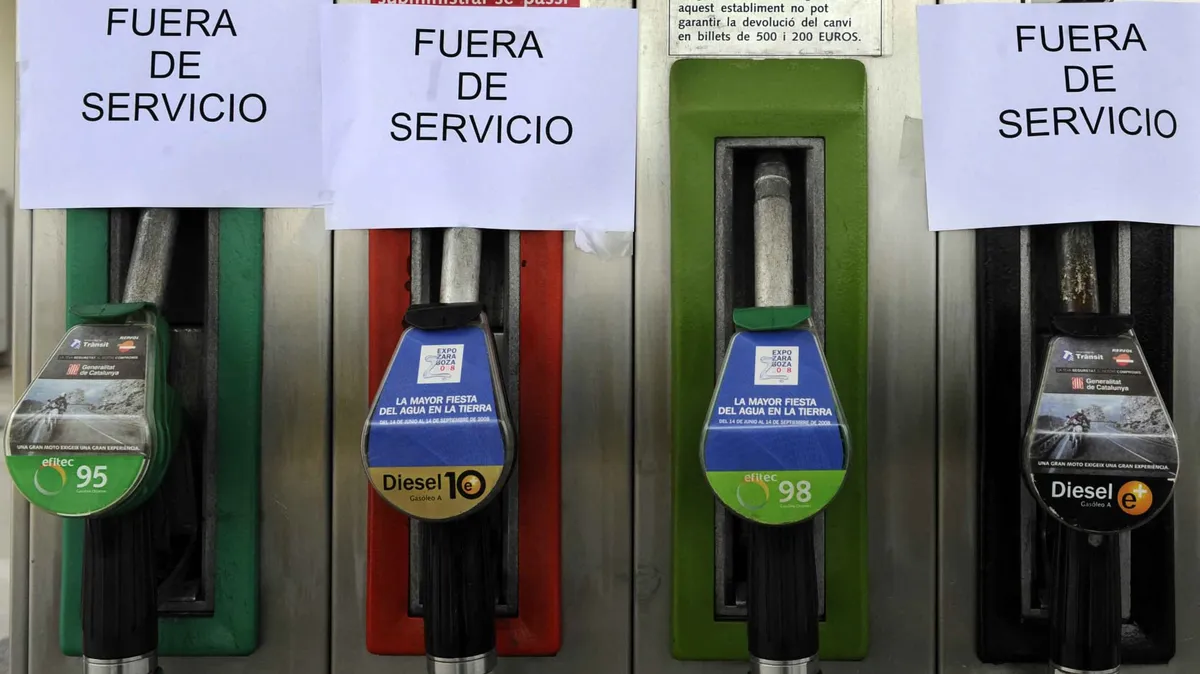
Current State of Fuel Prices
As of March 9, 2026, fuel prices have reached alarming levels across several European countries, particularly in France, Spain, and Luxembourg. The price of diesel in France is nearing 2 euros per liter, while in Spain, it averages 1.735 euros per liter. Luxembourg has also experienced significant increases, with diesel prices rising from 1.48 euros to 1.77 euros in just three days.
Recent Developments
The surge in fuel prices can be traced back to the ongoing war in the Middle East, which has caused the price of oil to exceed 100 dollars per barrel. This geopolitical instability has had immediate repercussions on the fuel market, leading to sharp price hikes that consumers are now facing. In Luxembourg, the price of unleaded 95 gasoline rose from 1.483 euros to 1.522 euros between February 24 and March 4, 2026, further illustrating the rapid changes in the market.
Impact on Consumers and Businesses
The direct effects of these price increases are being felt by consumers and businesses alike. For instance, the price difference for fuel between France and Germany is currently between 30 to 40 cents per liter, making French fuel stations particularly attractive to German drivers. This has led to increased traffic at French stations, as consumers seek to take advantage of lower prices despite the overall rise in fuel costs.
Expert Perspectives
Experts have weighed in on the situation, highlighting the broader implications of these price hikes. Frédéric Plan noted that “all European countries are experiencing the same extraordinary wave of price increases,” indicating that this is not an isolated issue but rather a widespread challenge facing the continent. Meanwhile, Marc-Antoine Eyl-Mazzega pointed out that “most countries have immense stocks that allow them to maintain supply for two to three weeks,” suggesting that while immediate impacts are significant, there may be some buffer against prolonged shortages.
Market Dynamics
Philippe Chalmin provided further insight into the market dynamics at play, stating, “When you sell something and need to buy the equivalent to maintain your supply, will you sell what you have at the price you bought it or at the price you will replace it?” This highlights the tension between current supply costs and market pricing strategies, which could lead to further fluctuations in fuel prices in the near future.
Historically, the price of fuel that consumers are currently paying was purchased by refiners before the onset of the Middle Eastern conflict. As a result, the full impact of the war on consumer prices was expected to be felt in the weeks following the escalation of tensions. This context is crucial for understanding the current pricing landscape, as it underscores the lag between market events and consumer pricing.
Looking Ahead
As the situation evolves, consumers and businesses alike will be closely monitoring fuel prices. The ongoing geopolitical tensions and their impact on oil prices will likely continue to influence the market. Details remain unconfirmed regarding how long these price increases will persist and whether any relief measures will be implemented by governments or industry stakeholders.