Introduction
As winter approaches, many regions across the United States brace for colder temperatures and inclement weather. Winter weather warnings are critical tools that inform the public about potential hazards such as heavy snowfall, freezing rain, and extreme wind chills. These warnings not only help individuals prepare for adverse conditions but also play a crucial role in reducing accidents and ensuring safety during severe winter storms.
Current Developments in Winter Weather Warnings
As of November 2023, meteorologists are predicting a significant winter storm to impact the Northeast and Midwest regions. The National Weather Service has issued winter storm warnings and advisories across multiple states, including New York, Pennsylvania, and Illinois. These warnings signal the expectation of heavy snowfall rates of up to 2 inches per hour in some areas, combined with gusty winds leading to hazardous driving conditions and power outages.
In addition to snowfall, the forecast includes the potential for ice accumulation, particularly south of the snow line, raising concerns about freezing rain that could cause trees and power lines to collapse. Transportation agencies are advising motorists to avoid traveling unless absolutely necessary, as roads can quickly become treacherous.
How Warnings Are Issued and Their Importance
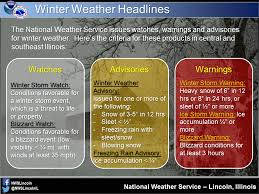
Winter weather warnings are issued by the National Weather Service based on a combination of factors: current weather data, satellite observations, and predictive modeling. There are several types of alerts, including Winter Storm Watches, Winter Weather Advisories, and Winter Storm Warnings. Each serves a distinct purpose depending on the severity and likelihood of the predicted winter weather.
Understanding the difference between these alerts is essential for individuals and families to take appropriate actions. A Winter Storm Warning, for example, means that severe winter weather is imminent and preparations should be made immediately, while a Winter Weather Advisory might indicate that conditions are less severe but still pose risks to the unprepared.
Conclusion
Winter weather warnings are vital for public safety during the winter months, alerting individuals to the dangers posed by severe weather conditions. As this winter season unfolds, it is important for residents in impacted areas to stay informed through reliable sources and adhere to safety recommendations. As the climate continues to change, the predictability and patterns of winter storms may also shift, making it crucial for communities to prepare and adapt accordingly. With the right precautions, people can safeguard themselves and others during the harshest conditions winter has to offer.