Introduction
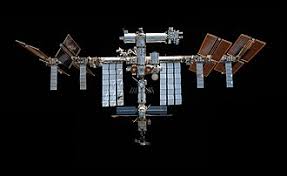
The International Space Station (ISS) stands as a monumental achievement in human engineering and collaboration. This multifaceted laboratory orbiting Earth has played a crucial role in scientific research, international cooperation, and the advancement of space exploration. Established in 1998, the ISS represents the commitment of multiple nations to push the boundaries of knowledge and technology. Its continued relevance is underscored by recent developments, research initiatives, and the future of crewed space science.
Recent Developments
In recent months, the ISS has once again captured global attention, particularly with its ongoing research projects. One notable recent achievement was the successful return of crew member Frank Rubio, who spent an unprecedented 371 days in space. This record-breaking mission provided invaluable data on the long-term effects of spaceflight on the human body, which is essential for future missions to the Moon and Mars.
Additionally, technological advancements are proving to be significant on the ISS. In October 2023, NASA announced a successful trial of solar propulsion systems aboard the station, marking a critical step toward more sustainable space travel. This innovative technology could be a game-changer for future missions, reducing the reliance on traditional fuels and improving mission efficiency.
International Collaboration
The success of the ISS has greatly relied on international partnerships, with 15 nations contributing to its construction and ongoing operations. Recent agreements to extend the cooperation between NASA, Roscosmos, ESA, JAXA, and CSA have emphasized a shared commitment to research and advancements in human spaceflight. In a historic meeting of space agency representatives in September 2023, plans were discussed for potential extensions of the ISS operations into the late 2020s.
Future Prospects
The future of the ISS is promising yet complex, as discussions about transitioning to commercial space stations are underway. As NASA prepares for missions to the Moon and potential habitation on Mars, the ISS will continue to serve as a platform for testing technologies and conducting experiments integral to these endeavors. The use of the ISS for commercial research opens new avenues for private entities interested in accessing low Earth orbit for scientific and technological advancements.
Conclusion
The International Space Station remains vital in expanding our understanding of living and working in space. As we look to the future, it is clear that the ISS will play an essential role in preparing for humanity’s next steps beyond Earth, serving as a bridge to further exploration. Its legacy, built on international collaboration and cutting-edge research, continues to inspire generations and push the boundaries of what is possible in space exploration.